Shopping Lexington by neighborhood can feel confusing fast. One page shows values in the low $300,000s, another shows prices near $400,000, and a premium in-town area can jump far beyond that with only a handful of homes for sale. If you are trying to match home style, location, and budget, it helps to know that Lexington is really a collection of very different housing pockets. This guide breaks down the city’s main neighborhood style clusters, typical value ranges, and the tradeoffs that matter most so you can search with more confidence. Let’s dive in.
How to read Lexington home values
Lexington does not have one single price point that tells the whole story. Current market measures vary depending on whether you are looking at average home value, median sale price, or median listing price.
Zillow places Lexington’s average home value at $336,762 and its median sale price at $332,250. Redfin shows a median sale price of $350,000 for the three months ending May 2026, while Realtor.com shows a median listing price around $399,000 on the city page and about $419,900 on the Fayette County page.
Those numbers are not really in conflict. They reflect different ways of measuring the same market, and they also show how much neighborhood, housing type, and available inventory can shape what you actually pay.
Lexington’s three main style buckets
A simple way to understand Lexington is to group homes into three broad buckets. Each one tends to attract a different buyer and comes with a different price pattern.
Premium historic in-town districts
These areas tend to have older architecture, strong location appeal, and very limited inventory. In places like Chevy Chase, Ashland Park, Bell Court, and Gratz Park, value is often driven as much by scarcity and setting as by square footage alone.
Value-oriented inner-ring neighborhoods
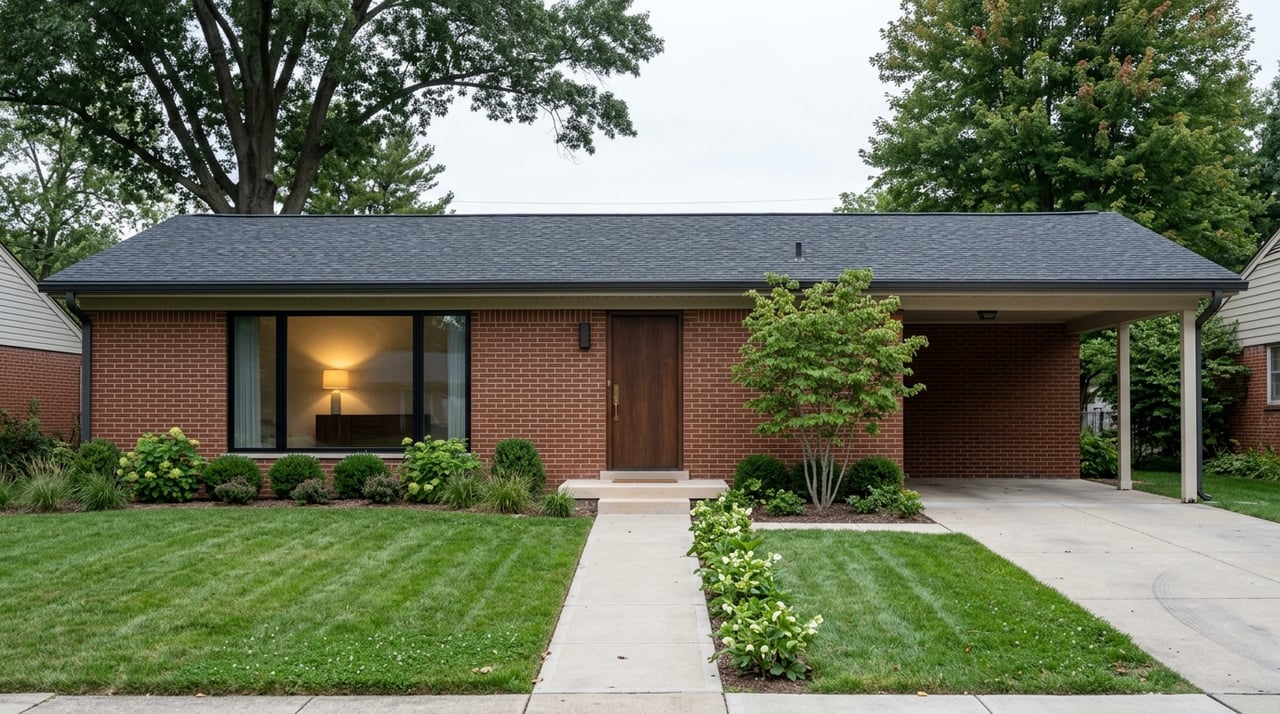
These neighborhoods usually offer older homes at more moderate prices than the top-tier historic districts. You often see bungalows, ranches, Cape Cods, and cottages in places like Kenwick, Southland, and Picadome.
Condos and townhomes
If your priority is a lower entry point, condos and townhomes are worth serious attention. Redfin shows Lexington condos for sale at a median listing price of $285,000, and Homes.com lists townhomes at a median of $297,450.
Premium historic neighborhoods in Lexington
If you love older architecture and central Lexington access, the city’s historic in-town districts are often the first places you look. These neighborhoods are visually distinctive, but they also tend to be the hardest to measure with neat pricing averages because supply is so thin.
Chevy Chase prices and styles
Chevy Chase is one of the clearest current premium benchmarks in Lexington. The city describes it as one of Lexington’s most historic and sought-after neighborhoods, with Craftsman bungalows, Tudor Revivals, and homes mostly built between the 1920s and 1960s.
Realtor.com currently shows a median listing price of $969,950 in Chevy Chase. That number helps set expectations for buyers who want a prime in-town location with established housing stock and limited supply.
Chevy Chase also sits in an ND-1 overlay area. According to the city, that can regulate exterior materials, roof lines, setbacks, garage doors, landscaping, and parking design.
Ashland Park character and value context
Ashland Park is an early-20th-century planned suburb built around curving streets and greens. Housing styles in the broader corridor include Colonial Revival, Craftsman, Bungalow, Tudor Revival, Dutch Colonial Revival, Prairie, Georgian Revival, Spanish Eclectic, French Eclectic, and Italian Renaissance.
Inventory is very limited here. Realtor.com currently shows only three homes for sale in Ashland Park, which means exact neighborhood medians can be less reliable than nearby context.
Because of that, nearby East Lexington areas often help frame value expectations. In the mid-to-upper in-town range, Aylesford Place is a useful benchmark at about $684,500.
Bell Court and Gratz Park scarcity
Bell Court leans toward later-19th- and early-20th-century architecture. The district includes Queen Anne/Eastlake, Queen Anne/Shingle, Arts-and-Crafts/Cubic, Dutch Colonial, and Colonial Revival homes, mostly as single-family houses with a few duplexes.
But Bell Court is also a good example of why some neighborhood pages show limited or missing pricing data. Realtor.com shows almost no active supply there, so nearby 40502 and 40507 ZIP benchmarks are more useful than trying to force an exact neighborhood median.
Gratz Park works the same way. It is one of Lexington’s oldest preserved areas, with styles ranging from Greek Revival and Gothic to log, Victorian, and grand 19th-century townhouses around the park. Realtor.com currently shows only two homes for sale there, which reinforces its scarcity-market behavior.
Northside’s older housing stock
Northside is another historic-stock area worth watching. The National Park Service lists Greek Revival, Late Victorian, and Bungalow/Craftsman among its styles.
For buyers, Northside can appeal if you want older Lexington architecture and a central location. Pricing can vary widely depending on condition, exact location, and available inventory, so it is best viewed as part of the broader older-housing conversation rather than a single-price neighborhood.
Value neighborhoods with older homes
Not every buyer wants or needs a near-million-dollar in-town address. Lexington also has several inner-ring neighborhoods where you can still find charm, older homes, and a more moderate budget range.
Kenwick bungalows
Kenwick is closely tied to Craftsman-style bungalows. The Kentucky Historical Society notes that bungalow growth became a defining part of the neighborhood’s identity.
Current pricing reflects that appeal. Realtor.com shows Kenwick at a median listing price of $411,950, which places it in a middle band where character and location still matter, but entry is more accessible than the top premium districts.
Southland and Picadome homes
Southland and Picadome are classic examples of value-oriented older neighborhoods. Southland is described as one of Lexington’s first suburbs, with homes usually ranging from 1,000 to 1,800 square feet and styles that include brick ranches, cottages, stone Cape Cods, and bungalows.
Picadome has a similar mix, with Craftsman bungalows, Cape Cods, ranch-style mid-century homes, and some mid-rise condo units. Realtor.com shows Picadome around $364,950, while the 40503 ZIP is around $397,250.
These areas can make sense if you want more space-for-dollar than the premium in-town districts and a housing mix that often includes simpler layouts and more single-level living.
Greater East End entry pricing
For lower-cost older housing stock, Greater East End stands out. Realtor.com places it at about $247,450, and the 40508 ZIP is about $279,500.
That makes the north and inner-core east side one of the clearest entry-level zones for buyers who want older Lexington homes without stepping into upper-tier pricing. As always, exact values depend on condition, updates, and the specific block or pocket.
Budget bands that can guide your search
If you are trying to narrow options quickly, it can help to think in budget bands instead of neighborhood names alone.
Under $300K
At this price point, the most realistic options are often condos, starter townhomes, and older homes in places like Greater East End or some Northside-adjacent areas. Condos and townhomes set a lower entry point than the broader single-family market.
$300K to $450K
This is a strong range for buyers looking at Kenwick, Southland, Picadome, and many updated bungalows or smaller ranches. You may still need to make tradeoffs on size, finish level, or exact location, but this band opens up more classic Lexington character.
$450K to $700K
This range starts to capture larger or better-located in-town homes. Nearby benchmarks such as Aylesford Place at about $684,500 and Bell Court’s broader ZIP context in the roughly $625,000 to $750,000 range help frame expectations.
$700K and up
This is where scarcity-driven premium districts become more common. Chevy Chase is the clearest current example at $969,950, and exact neighborhood medians in places like Gratz Park or Bell Court may be less useful because inventory is so limited.
Why some neighborhoods show no median
If you have ever searched a Lexington neighborhood and seen thin or missing data, there is a simple reason. Some of the city’s most desirable historic neighborhoods do not have enough active listings at a given moment to produce a stable median.
Current inventory shows just 7 homes for sale in Chevy Chase, 3 in Ashland Park, 2 in Gratz Park, and 0 in Bell Court. In those cases, nearby neighborhood and ZIP-code benchmarks are often a more reliable way to understand value than a neighborhood median built on almost no supply.
Maintenance and rules to keep in mind
Home style is not just about looks. It can also shape upkeep, renovation flexibility, and your long-term costs.
Historic district review rules
In Lexington’s 15 historic districts, the city says property owners must get a Certificate of Appropriateness for exterior work. Substantial changes are reviewed by the Board of Architectural Review.
That can be important if you are buying in a historic area and expect to make visible exterior changes. In ND-1 zones such as Chevy Chase, design rules can also affect materials, roof lines, setbacks, garage doors, landscaping, and parking design.
Simpler homes versus ornate homes
The tradeoff is often straightforward. More ornate homes can bring more architectural character, while simpler forms can be easier to maintain.
For example, Bell Court’s Queen Anne, Dutch Colonial, and Colonial Revival homes often include porches and later additions. Southland’s ranches and Cape Cods are generally simpler in form, which may appeal if you want a more straightforward maintenance profile.
Matching style to your lifestyle
The best Lexington neighborhood for you depends on what matters most in your day-to-day life and long-term plans.
If you want older streets, central location, and strong neighborhood character, the historic in-town districts may be the right fit. If you want a better space-for-dollar tradeoff and more single-level options, Southland and Picadome may be more practical.
If your main goal is entering the Lexington market at a lower price point, condos and townhomes deserve a close look. They are especially relevant if you want a home near the University of Kentucky or downtown without reaching for premium single-family pricing.
Whether you are comparing a bungalow in Kenwick, a ranch in Southland, or a luxury listing in Chevy Chase, the key is reading the neighborhood and the housing type together. If you want help sorting through Lexington’s price bands, style differences, and what they mean for your next move, Thaddeus Blevins can help you build a smart, data-informed plan.
FAQs
What do Lexington home value numbers really mean?
- Lexington value numbers often reflect different metrics, such as average home value, median sale price, or median listing price, so you should compare like with like when judging neighborhoods.
What are the most expensive in-town neighborhoods in Lexington?
- Premium in-town areas like Chevy Chase, Ashland Park, Bell Court, and Gratz Park tend to command higher prices because of location, historic housing stock, and limited inventory.
What Lexington neighborhoods offer older homes at lower prices?
- Greater East End, parts of Northside-adjacent areas, Southland, and Picadome can offer older homes at lower entry points than premium historic districts.
Are Lexington bungalows always affordable?
- No. Bungalows in Kenwick are priced much differently than bungalows in Chevy Chase, where they are part of a higher-priced premium market.
Why do some Lexington neighborhoods show no median price?
- Some neighborhoods have too few active listings to support a stable median, so nearby ZIP-code or neighborhood benchmarks are often more useful.
Do historic homes in Lexington have extra renovation rules?
- Yes. In Lexington historic districts, exterior work generally requires a Certificate of Appropriateness, and substantial changes are reviewed by the Board of Architectural Review.